Visual Archive
Gallery of Babylon
A curated collection of the most iconic landmarks, artifacts, and scenes from the golden age of Babylonian civilization.



Ancient Mesopotamia · 1894 BC
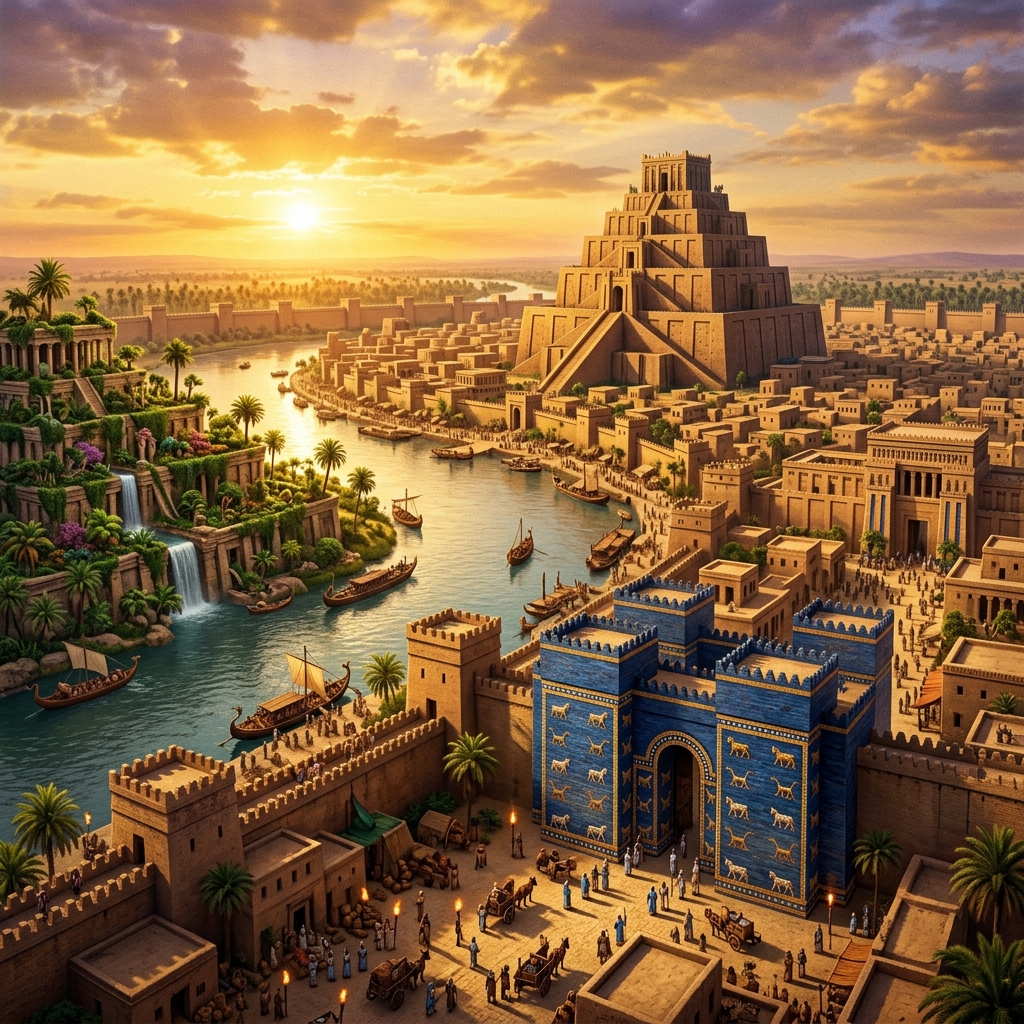
The jewel of the ancient world — a city of towering ziggurats, sacred gates, and the earliest codes of law ever written.
Explore the CultureVisual Archive
A curated collection of the most iconic landmarks, artifacts, and scenes from the golden age of Babylonian civilization.
Featured
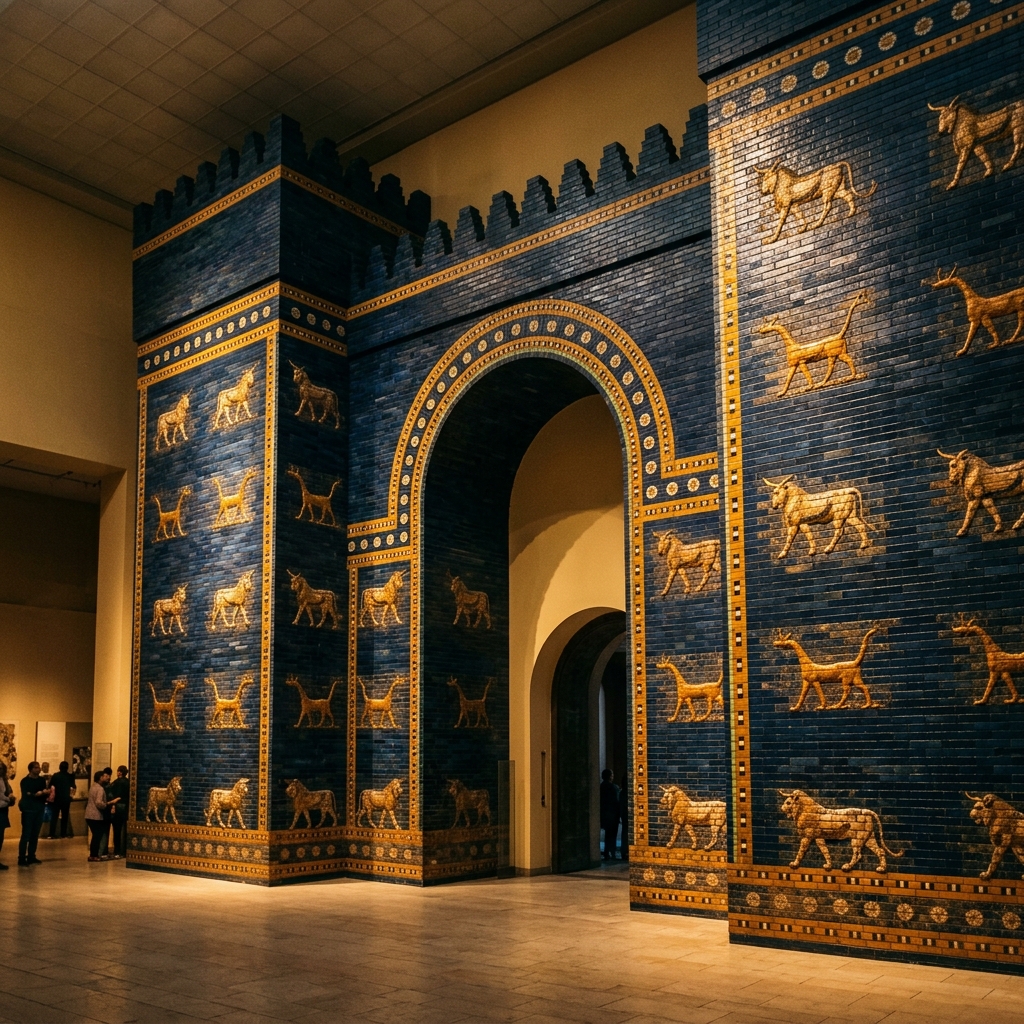
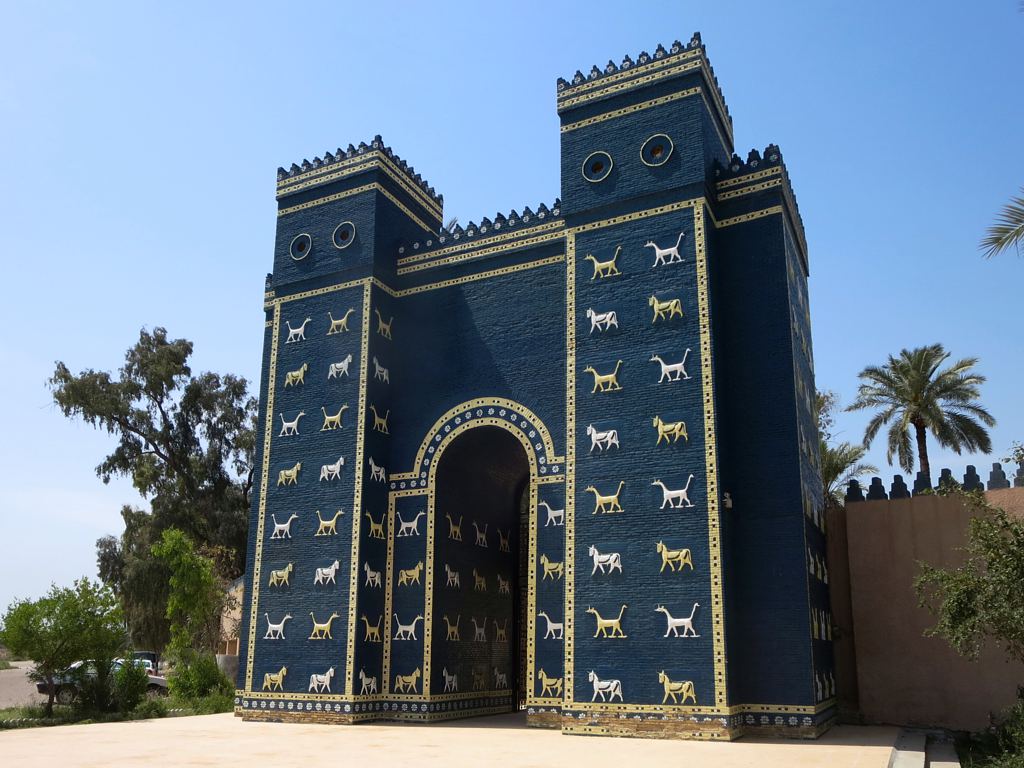
Built by King Nebuchadnezzar II around 575 BC, the Ishtar Gate was the eighth gate of the inner city of Babylon. It was the most magnificent of all — a stunning double gateway covered in brilliant lapis lazuli blue glazed bricks.
The gate was decorated with alternating rows of bas-relief dragons (mušḫuššu) and bulls, symbols of the god Marduk and Adad. It stood as the ceremonial entrance to the city along the famed Processional Way.
Today, a reconstruction can be found in the Pergamon Museum in Berlin, while original fragments remain scattered in museums worldwide.
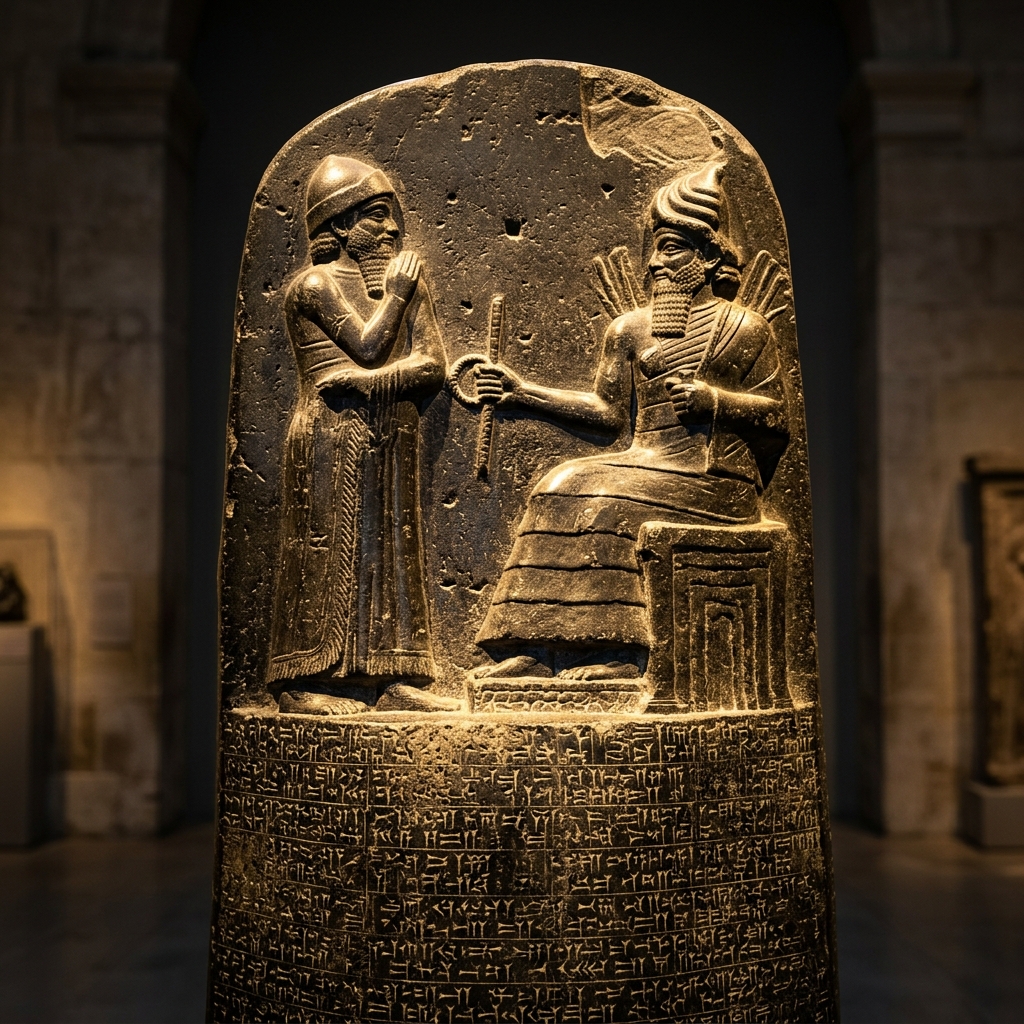
The Code of Hammurabi is one of the oldest deciphered writings of significant length in the world. The sixth Babylonian king, Hammurabi, enacted the code, and partial copies exist on a man-sized stone stele and various clay tablets.
With 282 laws covering trade, property, family, and crime, it established justice across the entire Babylonian Empire — the foundation of all future legal thought.
Mythology & Belief
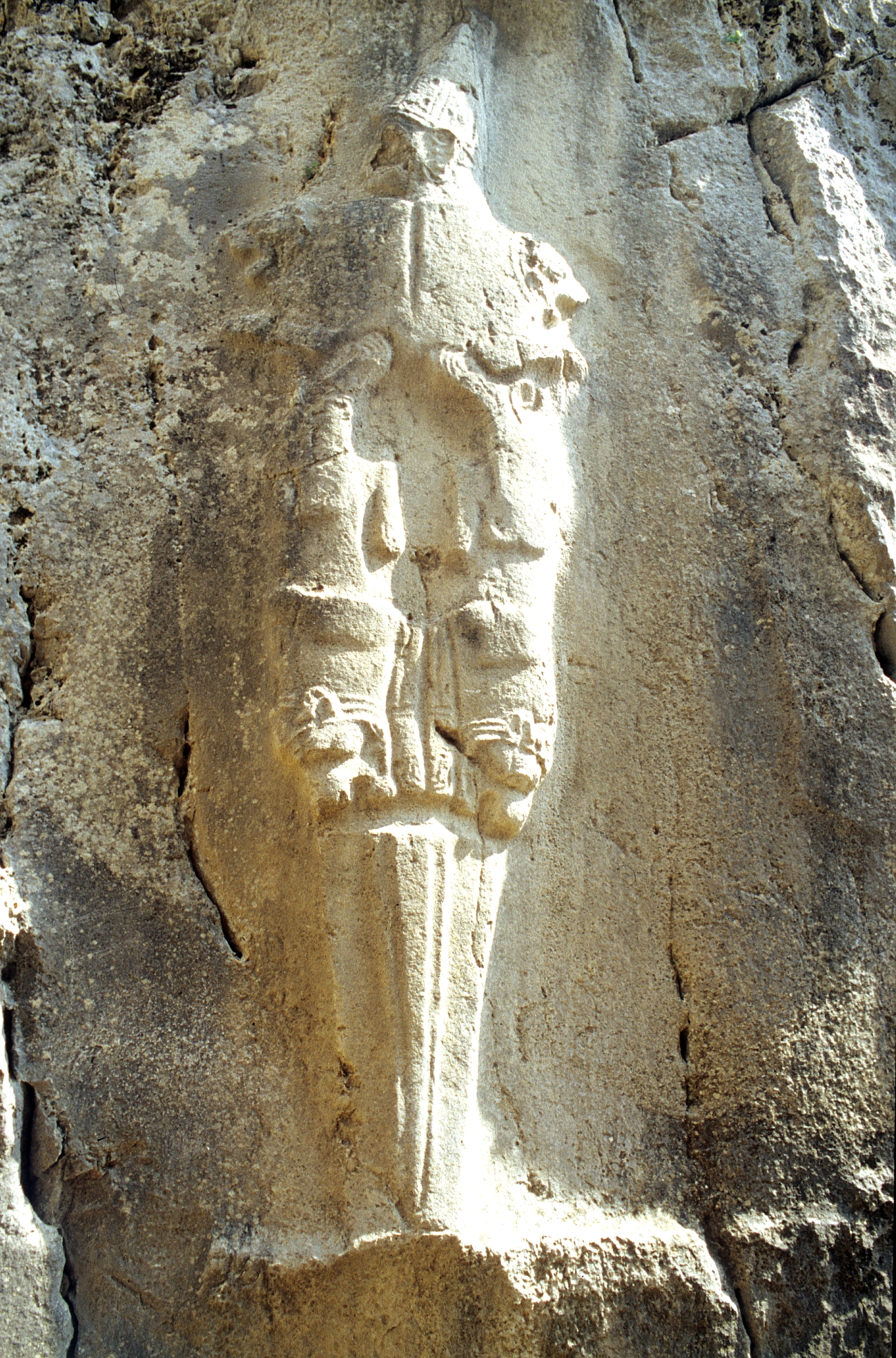
The Babylonians worshipped a rich pantheon of gods who governed every aspect of life — from creation and war to love and wisdom.



Knowledge & Discovery
Long before the Greeks, Babylonian scholars charted the heavens, invented algebra, and calculated the movements of planets with extraordinary precision.

This Babylonian clay tablet, dating to 1800 BC, lists Pythagorean triples over a thousand years before Pythagoras was born. Scholars now believe it was a trigonometric table — the oldest in history.
Babylonian mathematicians used a base-60 (sexagesimal) number system — the reason we still divide hours into 60 minutes and circles into 360 degrees today.

One of the earliest astronomical records ever discovered, this tablet tracked the rising and setting of the planet Venus over 21 years — around 1600 BC. It forms part of the series Enuma Anu Enlil, a collection of 70 tablets of celestial omens.
Babylonian astronomers identified and named five visible planets, predicted solar and lunar eclipses, and created the 12-constellation zodiac that astronomy still uses today.
Language & Legacy
The Babylonians inherited and perfected cuneiform — humanity's first writing system — and used it to record everything from royal decrees to love poetry.


Cuneiform originated in Sumer around 3400 BC and was perfected by the Babylonians. The word cuneiform comes from the Latin cuneus (wedge) — named for the wedge-shaped marks pressed into soft clay tablets using a reed stylus.
𒀭𒂗𒍪 𒀭𒂗𒍪 𒀭𒂗𒍪Babylonian scribes were highly trained professionals who memorized thousands of signs. They recorded tax records, trade agreements, astronomical observations, royal decrees, myths, and hymns — creating one of the richest literary traditions of the ancient world.
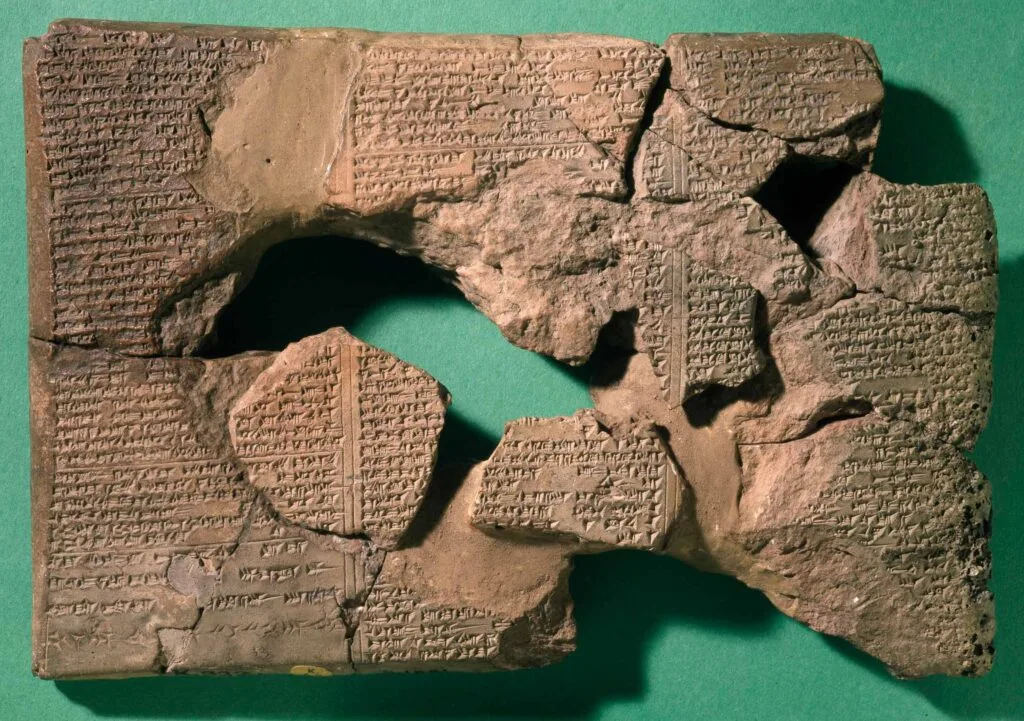
Written in cuneiform on 12 clay tablets, the Epic of Gilgamesh is the world's oldest piece of literature. It tells the story of a legendary Babylonian king who seeks immortality — and contains a flood story strikingly similar to the Biblical account of Noah's Ark, written nearly a thousand years earlier.
The Flood Tablet (pictured), discovered in Nineveh and now in the British Museum, is one of the most significant archaeological finds in human history.
By the Numbers